Showing posts with label Religious Education. Show all posts

Tuesday, 2 February 2021

Remote Learning - How to encourage peer interaction in Google Classroom - Ian Stonnell

At Denbigh we do not do 'live' lessons in the way they are portrayed in the media. Rather we take a synchronous approach were we post resources on Google Classroom, including pre-records, set tasks and then watch the work come in to give feedback on. During this time we are available to answer questions submitted via email or through the Classroom comments section. This approach has the advantage of allowing students to get the work done at their own pace and even go asynchronous if needed.

However, the issue with this approach can be the lack of peer interaction. This is quite a concern as the EEF found that during remote learning periods, peer interactions helped to improve motivation and led to better outcomes. This probably makes a lot of sense after all for many subjects peer interaction, though debate and discussion, is often the lifeblood of a lesson that characterizes deep learning and understanding. 

The loss of peer interaction is inherently de-motivating and can limit pupil progress.

The question is how can we bring back some of this peer interaction into our current model of remote learning? In this blog we will look at a few ways that teachers have been attempting to do this using Google Classroom. If you have any other ideas please get in touch and let me know! 

1. Using the 'Announcement' feature to encourage discussion in History
In this example Sana Tariq encouraged peer interaction by using an announcement to pose an open question assessing prior knowledge about the Crusades. Students responded rapidly through the lesson hour. During this time Sana responded to comments, checked misconceptions, issued praise and asked further developmental questions which encouraged students to conduct their own research on the topic. 

In total 41 comments were made and students certainly got a good feel for other students being present in the classroom working toward the same learning goals.

2. Using the 'Question' feature to encourage debate in RE
When setting assignments Google Classroom offers a 'question' feature. It is a wonderful way to encourage general discussion and debate in an online setting.

An example of how to set up a debate question on Google Classroom.

When you set a question it creates what is essentially a message board, where students can answer the question and also reply to other student's answers. It also places the teacher as a moderator who can equally engage with discussion, adding comments, responding to comment and adding further questions and so on, as well as have the ability to delete comments and mute students if needed (this feature is available throughout the Google Classroom - just click on the 3 dots next to any comment). 

Last week the whole RE department used this approach in a year 7 debate about the nature of evil and suffering. This generated some passionate arguments and top quality work, largely due to the genuine peer interaction that was offered. 


3. Sharing documents to enable peer marking in English 
Finally, in English they have been using peer marking as a way of encouraging student interaction. Using the sharing settings on any document, a student can give access rights to one of their peers allowing them to make comments and suggestions which can be reviewed by the class teacher.

An example of peer marking in year 11 English.

Considering the benefits of encouraging peer interaction I hope you give one of these strategies a go. You could possibly do it as a review activity for the learning students have engaged in so far, I know that's what I am going to. 

Thanks to all the teachers who have contributed to this week's blog! 

Ian Stonnell @DenbighCPD

Wednesday, 21 October 2020

VLOG#3 - Using Rubrics to improve marking and feedback - Ian Stonnell

Let's be honest, marking has always been a drag for teachers. Going through books, deciphering the handwriting, giving meaningful comments... it could all take an age. The impact of this incredible effort has also always been a debatable one. I know, from personal experience as an RE teacher, that once I've completed a piece of marking the impact it has on many students is negligible, especially considering the amount of time between them doing the work and then me getting it back to them.

Is there a better way? 

Well yes. Marking using Google Classroom.

In GCSE RE we have put a great deal of effort into the use of  assignments on Google Classroom - we have used them both in the classroom and remotely. Now, with the introduction of the rubric tool, a revolution is taking place. It is now possible to mark work and give feedback so quickly and efficiently that our marking has becoming a powerful tool with meaningful impact. Have a watch of this video to see how we have designed and used a rubric to improve our marking and feedback.

What do you think of that? Is it something that could work in your context? Consider that using this system means marking can be done anywhere, anytime without the need to go near (or carry) a pile of exercise books, and that the feedback is quick, legible and easy to act upon. There's got to be a way you can use it!

Below is another video with a brief guide on how to make a rubric.

Obviously traditional marking will have it's place (for now). We still want students to complete written work and we will still need to mark this work - and in some subjects requirements are different. Nevertheless, the direction of travel, particularly in light of Covid-19, is that digital learning is the future, and that includes digital examinations. Get ahead of the game and start to experiment with rubrics.

Ian Stonnell @DenbighCPD

Thursday, 2 April 2020

CPD in the time of Covid-19 - Subject Knowledge - Ian Stonnell

Subject knowledge has for many years been a neglected aspect of teacher development. Thinking back to when I was an NQT, the main focus of CPD was on pedagogy, classroom practice and the pastoral aspects of the job - subject knowledge sessions were sporadic and came occasionally through an external CPD course.

I suppose the logic behind this is based upon a presumption that a teacher already possesses the subject knowledge they require to teach, after all they should have a degree and a passion in that subject (why else would you want to teach it?) There is also a presumption that any gaps in teacher knowledge would be easily filled on the job. So long as we stayed a page ahead in the textbook, after a few years a teacher's knowledge would be secured.

However, this approach is increasingly up for debate. To understand the debate it is useful to understand the three types of knowledge teachers require to be effective.
  1. Subject knowledge: Knowledge of a domain. e.g. Maths or Art etc.
  2. Pedagogical knowledge: Knowledge of how to teach e.g. adaptive learning, cognitive science, metacognition, SEND, behaviour management etc.
  3. Pedagogical content knowledge: Knowledge of how to teach a given subject. e.g. how to run a tennis skills session in PE or a short skit in drama.
The best teachers are competent in all three areas. However, currently subject knowledge is neglected in our CPD models. The current trend says this needs to change.
Currently CPD in most schools does not take into account subject knowledge development.
How important is subject knowledge?
With the changes in GCSE specification to be 'knowledge rich' there has been a scramble for teachers to fill the gaps. However, although many may have complained about this upscaling in knowledge, it is important to understand why this change has happened.

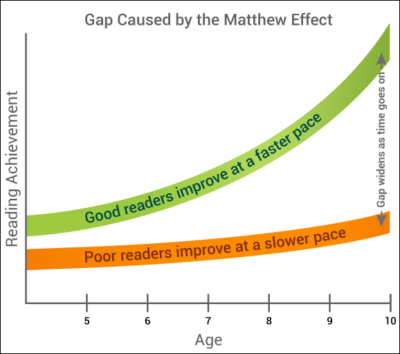
Think about money. There is a well known principle that if we start off our lives with a large amount of capital then it is easier to create more capital, regardless of how 'talented' we may be. Also if we have very little capital it is incredibly difficult to make any. Thus a gap between rich and poor develops. This is known as the Matthew effect.


Small Loan of a Million Dollars - Donald Trump CNN - YouTube
Donald Trump may not be the most talented person around but with a small starting loan of a million dollars from his Dad he managed to do okay!

The Matthew effect also applies to knowledge. The more we know about a specific area of knowledge the easier it is to acquire more knowledge in that area. For our pupils, who are novices, acquiring knowledge is crucial in enabling them to accelerate and acquire more knowledge. As such, the knowledge rich curriculum is an attempt to narrow the gap between disadvantaged students and the rest. 

Research has shown that there is 'Matthew effect' in reading which has led to a word gap between advantaged and disadvantaged students.
This means that teachers need to be secure in the subject knowledge themselves in order to be able to deliver it effectively using sound pedagogical practices. This knowledge also needs to be deep enough to engage students. This is evident in many student surveys that have taken place at Denbigh in which students rate the best teaching in line with the teachers who they perceive to have the best subject knowledge. Furthermore, the students who won scholarships to Berkhamsted Sixth Form College reported that one of the major differences they noted was the subject expertise that their teachers possessed (this could be accounted for due to the transition to sixth form). 


It is evident that some of the most appreciated teachers are the ones who have deep subject knowledge. 


As an RE teacher, I can confess that my ability as a teacher only improved with the development of my own subject knowledge. Take for example my own knowledge of Islam. In my NQT year, a decade ago, my knowledge was no deeper than the five pillars. I could make a fun lesson or two and design lots of activities around them but the deeper knowledge behind those five pillars, the links to Islamic beliefs, history and culture and how they relate to personal and spiritual development did not exist. 

The best piece of CPD I did was to develop my knowledge of Islam. I sought out books on Islamic history and the Sunni/Shiah split, biographies of the Prophet (pbuh), as well as watching every documentary I could find. It took many years and is still ongoing.

Two of the books that helped me to become a better teacher of Islam.
Now, I would not claim to be anywhere near an expert (as the more we know, the more we realise we don't know) but I can be confident in answering further questions and contextualising beliefs and practices with a few more interesting anecdotes that promote engagement. That makes me a better teacher of RE regardless of what students I teach. 


How do we develop subject knowledge? 

Pedagogy matters - CPD in schools aims to help develop it and it should continue to do so. However subject knowledge needs more time. As a CPD lead at Denbigh we are planning to give more time to departments to help develop it in the upcoming 2021-22 academic year. Nevertheless, the best way to do it is to be passionate about our own subjects and seek out books, websites, subject associations and documentaries to develop our knowledge of our subjects (whether it be knowledge of the content we teach, or wider knowledge of that subject). 

28% of Americans Have Not Read a Book in the Past Year | Time
"The more that you read, the more things you will know. The more that you learn, the more places you'll go" Dr Seuss. You can also add to the end of this quote - "and the more you can teach".
Enjoy your reading!


Further Reading

Friday, 7 February 2020

The power of telling stories for teaching and learning - Ian Stonnell

There is nothing quite like getting wrapped up in a story. The comfort of being pulled along on a narrative journey, freed from the shackles of our current reality and allowing ourselves to imagine and to think. Experiencing a story, by either reading or listening, is a powerful experience. It is also a teaching and learning gold mine. 

As an RE teacher I have used stories on many occasions and have recognised their impact. There are two examples that come to mind that I have used in recent times. One is the telling of the Christian story - from the creation, the fall of man and original sin, to the redemptive story of Jesus; incarnation, death and ressurrection. I tell this story at the start of a unit on Christian beliefs. I go for the whole story with subject specific vocabulary, and invariably I have a class in silence listening to the tale - all I have to support me are a selection of renaissaince art images for a bit of dual coding. There is nothing in their exercise books as evidence for this experience. Yet I have found that this experience has been invaluable for their memory and recall. As I move through the unit going into detail on specific Christian beliefs a large proportion of students can place them in the context of the wider narrative and as such they remeber more. Telling the whole story at the start of the unit provided a basis for students to collect the details at a later stage.

Image result for original sin
As a way to support memory and recall images of the story were used to accompany the story. As the unit continued the images were re used as a way of supporting recall.
The other example I come to think of is a short moral tale I invented that was designed to get students to evaluate the concepts of forgiveness, judgement and life after death - have a read and see what you think:

Once upon a time there were two good friends. One of them was a pious believer in God. He followed all the rules of his religion and lived with good intentions and great faith. His friend however, was not religious and had no belief in deities. Nevertheless, both were equals in good intentions and good deeds. In fact the two contributed to charitable events, together they helped the poor and needy. That is how they became friends. For years they both prospered. 
 
As time past and age took over, they began to think of the inevitable fate of death. One day near the end they had a discussion.
 
  
The non-believer began with the age old question “what will happen when we die?” 
 

His pious friend replied “Well, dear friend, I hope that when I die I will be judged kindly by God and, If God wills it, I will pass through the gates of heaven and reach paradise. Here I will be in eternal bliss with God.” 
 

At this response the non-believer felt nervous. He replied: “I am sure you will enter paradise my worthy friend.” However, as he spoke these words he thought to himself:  “I cannot believe in such things – If what my friend speaks of is the truth surely my judgement will be to burn in the fires of hell – yet I still do not believe! Oh now I come so close to death I fear for my soul!”  

The religious believer, sensing his friends anguish, felt compassion: “My friend, do not suffer, you still have time to declare your faith in God – he will forgive you.”  

“No, I cannot do it. It is just not possible for me to believe that a God can send good people to such suffering. What about my family, my loved ones who have passed away and did not believe… what of them? Oh, my friend! I can only see one hope for me…” 
 

“What is that hope?” his pious friend asked quietly, listening with regret and intrigue.
  

“Dear friend, if it turns out that what you say is the truth and you reach paradise. As you stand in the presence of God and I am sent to my doom, remember our friendship and please do one favour for me.”  

“Surely I will my worthy friend. What do you ask of me?”  

“Pass on this message…?” He paused. 

“What message my dear friend?" 

“Tell God… tell God that I forgive him.”

Take a moment to think about the story.

Did you get lost in the narrative? What thoughts were provoked in your mind?

Well I suppose to a degree it depends on the quality of my writing! I am no James Joyce! Nevertheless, I hope you can see how this story could open up numerous lines of discussion and debate - it is a story of controvesy after all. However, I hope that the residue of the thought this story creates will be an empathy of the human condition - that was the authors intention!

An important thing to note - this story provided me with no concrete value when it came to answering an RE GCSE exam question on life after death.

Image result for memory is the residue of thought

Why are stories so effective?
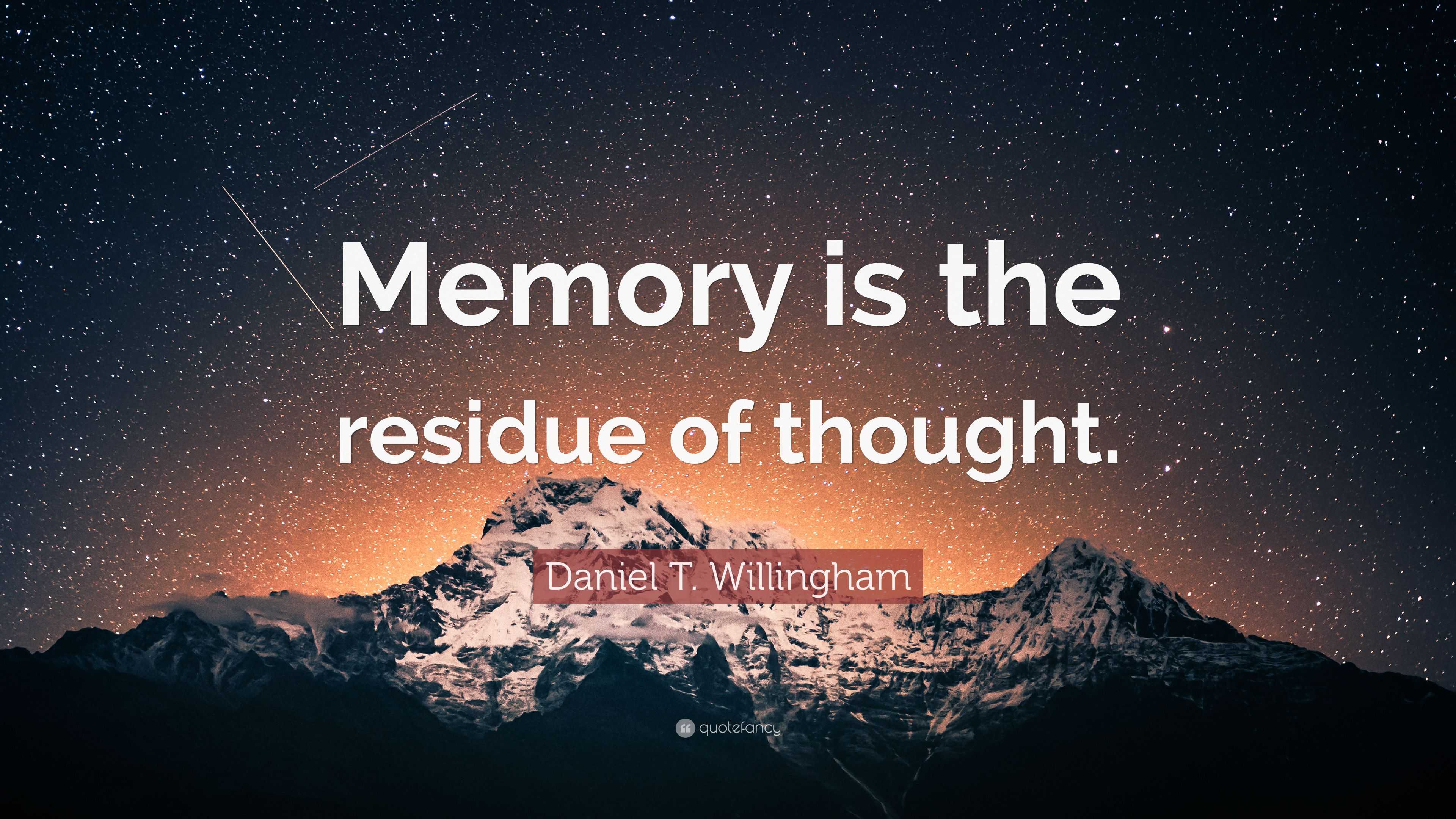
Dan Willingham the lauded cognitive psychologist, coined a famous phrase - "Memory is the residue of thought". It is what we think about in our working memory that we are most likely to transfer into our long term memory. Getting wrapped up in a story supercharges our working memory with thoughts that we can link to our own experiences or wonders. As such a story is a memorable experience.

Further to this, stories are challenging and as such can raise students overall achievement. When students are exposed to a story that is just above their reading age evidence shows that students can still comprehend it. There will be parts of such a story that students will not understand, vocabulary that will be new. However, within the context of a story a student can infer meaning. Furthermore, if a story is being read collectively students can infer meaning through disucssion about what they understand and what they do not.

Reading out loud
How we get students to engage in stories is also important. There is now a body of evidence that suggests reading out loud to students has a positive impact on progress. A recent study investigated the impact of reading aloud two novels over a period of 12 weeks to 368 year 8 students. On average all students made 8.5 months of progress in their reading age. A group of 'poorer' readers made 16 months progress - reference. That is an astonishing finding. Such an improvement in reading age will undoubtedly have knock on positive effects including improved outcomes in summative tests.
Image result for storytime adults
Reading aloud to students is an effective strategy. Students can just listen or follow along with their own copy of a text - both have strenghts.

Implications for teaching
  1. Think about stories/novels that may be relevant to tell in your curriculum. Obviously some subjects will find this easier than others. English and most of the humanities have story telling at their heart. However, even in technical subjects there are stories to be told. In art, their is the story of the inspiration of an artist. Geography the human tales of a natural disasters. In science there are stories of discovery and the motivations behind them. Relevant stories are everywhere. We must not be afraid to use them - even if they do not meet a requirement of an exam specification! It is also worth noting that students can comprehend stories aurally that are up to three years above their current reading age - so be challenging. Books for Topics is a great website devoted to primary, but may be useful for groups in KS3. 
  2. Consider how you can retell parts of your curriculum as a story. This is where we need to think about creating a narrative about a unit of learing. It could that a unit of work is framed as a line of enquiry (that could sound like a book title). "Why did they build Aswan dam? A tale of controversy in Egypt", "What made Picasso go so square? the rise of cubism in art", "I need to eat! The adventures of a hungry Englishman in Spain". Apologies for these silly ideas, but I hope you get my point! 
  3. Drawing out the personal narrative (a pastoral spin). How often do we reflect on our own 'story' - Where we have come from, where we are, and where we are going to? As adults perhaps quite a lot. However, do we encourage our students to do this in our pastoral roles? I could argue that a schools purpose is to influence the narrative of a students life. We should direct them and help them reflect and frame their own personal stories. Every student has a story to tell, can we help them tell it? 
This blog was inspired by a talk by @MaryMyatt delivered to Chiltern Learning Trust leaders. Please follow this link to resources shared by Mary - many of themes were addressed. Please also find below further links that may support your teaching and learning in reading.

Further Reading:

Wednesday, 29 January 2020

Engaging Passive Learners in RE through adaptive learning - Masuma Tafadar

Research and development focus
A passive learner is one that engages in learning at a superficial level; rather than be interested in thoughtful enquiry a passive learner will process information, such as copying or reading, without actually thinking about its meaning and therefore fail to encode any of the information into their long term memory and make any meaningful progress. 

The key question for teachers is to understand where this passivity comes from. In some cases it can be to do with a student's home life; through an upbringing of low expectations and a lack of parental engagement in the child's learning, a habit of passivity towards education can be developed. This and the wider problem of low cultural capital can cause passivity in the classroom - a problem that is difficult for an individual teacher to address. 


Another possibility is that students may not be receiving enough or the correct differentiated or scaffolded learning. This may mean that students are not able to access the information they are being taught in a meaningful way. This can lead to disengagement and student acceptance that they cannot exert control over their learning process. This inhibits the progress and growth of the individual and as a result de-motivates the student - this can lead to behavioural challenges including passivity. In this case an individual teacher can make a difference and this will be the focus of my research.


Image result for cultural capital
A poverty in cultural capital can mean a student lacks the habits of engaging in learning discussions making it difficult for them to access education, a subsequent failure in education can then lead to demotivation and passivity.
The aim of my research is to engage year 11 low-middle ability students who are extremely passive and disengaged learners. Many of these students lack focus and find it difficult to concentrate and stay on task. They lack motivation to do their work and often copy from the board, text-book or partner without engaging in the knowledge content and attempting to understand or process the information. They also struggle answering exam questions and do not use the differentiated worksheets/task-sheets effectively to help them answer the questions. Some of the students have very little confidence in themselves and have a negative outlook towards the work and the exam results; often saying they thought they would fail their GCSE exams.


In preparation for the GCSE exams, students needed to gain curriculum knowledge as well as practice exam skills. The 12 mark question was particularly challenging for them as they were required to evaluate a statement and formulate a thoughtful response with evidence to support their opinions. Although students had a planning sheet they rarely achieve more than 3 marks despite giving a lengthy answer. This only demotivated them and resulted in low self confidence.

Literature Review
A change in how information is received, interpreted and used can have a profound impact on student outcomes. In Principles of Instruction, Rosenshine presents 10 research-based principles of instruction. These principles come from three sources: (1) research in cognitive science, which focuses on how our brains acquire and use information; (2) research on master teachers, and (3) research on cognitive supports to help students learn complex tasks. This is effective instructional procedures, such as thinking aloud, providing students with scaffolds, and providing students with models. The focus of this research would be to explore point 3 - research on cognitive supports to help students learn complex tasks.
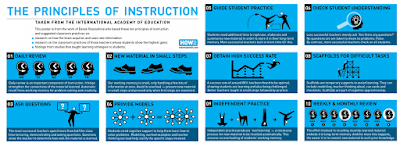

Image result for rosenshine principles


One principle is to present new material in small steps with student practice after each step. Small amounts of new material is presented at any time, and then students are assisted as they practice this material. This is because our working memory is small. It can only handle a few bits of information at once and too much information swamps our working memory. Presenting too much material at once may confuse students because their working memory will be unable to process it.

Providing students with models and worked examples can help them learn to solve problems faster. Rosenshine mentions that students need cognitive support to help them learn to solve problems. Teacher modelling and thinking aloud while demonstrating how to solve a problem are examples of effective cognitive support. Worked examples are another form of modelling that has been developed by researchers. Worked examples allow students to focus on the specific steps to solve problems and thus reduce the cognitive load on their working memory.


Providing students with scaffolds for difficult tasks: The teacher provides students with temporary supports and scaffolds to assist them when they learn difficult tasks. Scaffolds or instructional supports help students learn difficult tasks. These temporary supports are gradually withdrawn as learners become more competent, although students may continue to rely on scaffolds when they encounter particularly difficult problems. Providing scaffolds is a form of guided practice. Scaffolds include modelling the steps by the teacher, or thinking aloud by the teacher as he/she solves the problem.
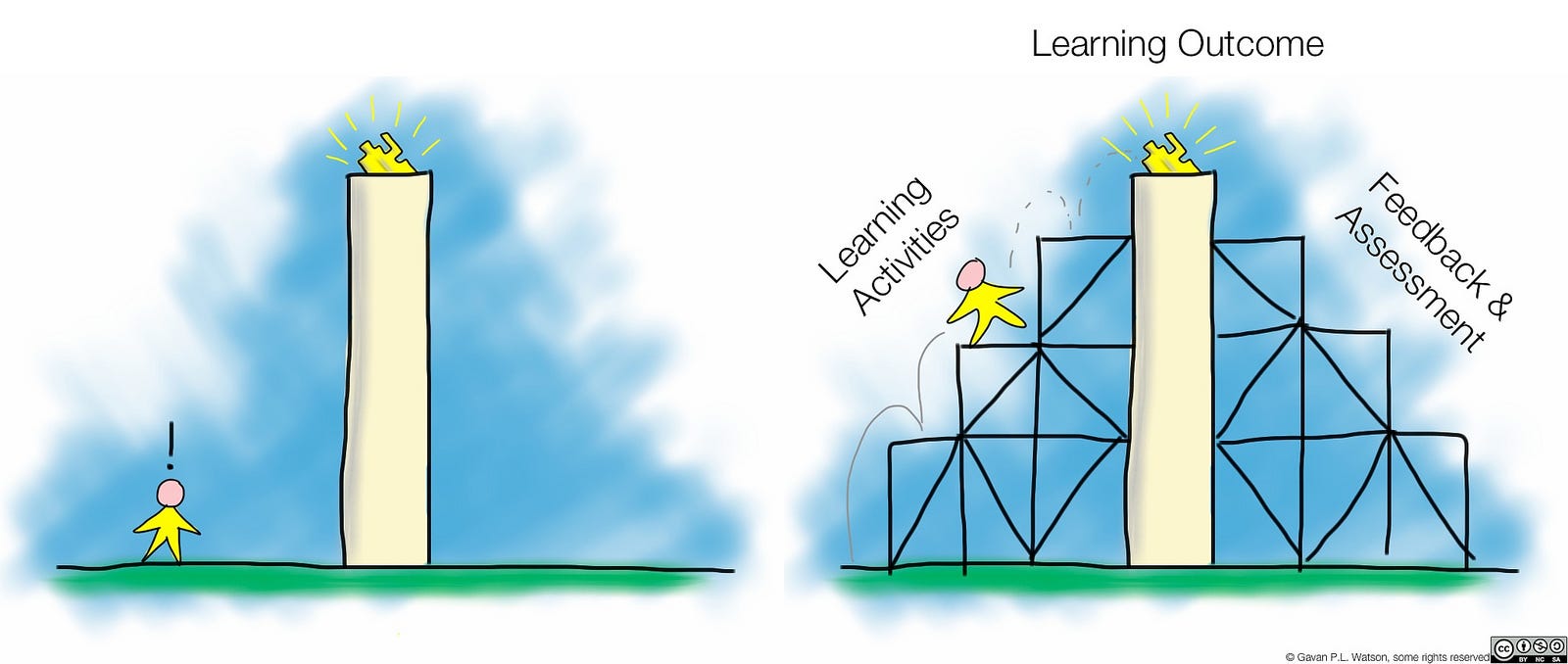

Image result for scaffold learning
Providing scaffolded tasks for learners can make daunting tasks achievable and increase motivation.
Additionally, it has also been found that scaffolding helps students learn more by working with a teacher to achieve their learning goals. Through research, Vygotsky found that children needed to interact with others who are more intelligent than they currently are in order to learn. These instructors or peers are the “scaffolding” who help the student expand their learning boundaries and learn more than they would be able to on their own.

Furthermore, Nicolas Pino-James mentions in the 'Golden Rules for Engaging Students in Learning Activities' that it is important to foster a sense of competence. The notion of competence may be understood as a student's ongoing personal evaluation of whether he or she can succeed in a learning activity or challenge. Schunk and Mullen (2012) have found that effectively performing an activity can positively impact subsequent engagement. To strengthen students' sense of competence in learning activities, the assigned activities could include feedback that helps students to make progress.

Intervention
The sample group used were 6 passive students from my year 11 GCSE class. The students were between 15-16 years old and a mixture of male and female students. The intention was to help improve their answers to 12 mark exam questions and also to help students evaluate their knowledge and to change their mindset to a positive attitude and reduce passivity.

I created and designed a template which students can use to plan and write an answer to a 12 mark exam question. Prior to this, students were using a template to plan an answer, however, they were unable to process the information or evaluate in a meaningful way.

To help scaffold the learning and in addition to the template, I created a colour coded template on a display board. Whilst they were using the template to plan their answer, I used the display to give direct instruction. I instructed them on what sections I wanted them to work on. This meant that they were not overwhelmed with the task and that it was manageable. I also provided examples so students understood what they had to do in each section. I looked through answers as students were working and gave feedback.

Display board showing the strategy
Example of a template used in the intervention

The evidence I collected are the answers they have written for 12 mark questions before using the template and then the answers given after using the templates. This helped to understand whether, this template and the method of breaking it up into manageable tasks, coupled with instruction improved their answers. I also interviewed students to gain an insight on there mindset and the effectiveness of the support as well as made casual observations.

Impact
The intervention was successful for 1 student out of the 6. The student was able to identify what was required of him and how to structure the answer. He was able to follow instruction well and went from a negative mindset and feeling like he would fail to becoming much more positive about his efforts and his outlook on the exam. Furthermore, giving feedback motivated him to work hard and learn. He felt much more confident in attempting to answer a 12 mark question and about his exam in general. He spoke about how hard he was revising for RE; this change in attitude was a great improvement in comparison to his attitude before.


1 out of 6 kids in Montana will experience hunger during their childhood
5 out of 6 students did not show a significant change in attitude or improvement in their answers. Some mentioned they found the simplified template still too complicated to use and were used to the previous template. However, on further questioning the students revealed that, due to gaps in their knowledge due to previous passivity, they lacked the desire to make improvements in this late stage of their education. Nevertheless, I found that the structure helped other students (those not part of this focus group) who struggled with answering questions and did not know how to put their thoughts into words effectively.

Further research
For further research, I would like to work with a larger focus group of passive students and low achieving students in year 7 and collate the evidence up until their GCSE exams. I believe this would result in more reliable data and also have a bigger impact on their engagement as a problem like passivity needs to be pre-empted in earlier year groups. I would also interview students at the beginning and end of the process to get a better idea of their mindset and how they found the template I created. This would give a good idea of whether students were passive due to disinterest or because they genuinely struggled.

Recommendations
  • Scaffold learning by breaking down new or complex skills or knowledge into smaller parts. After introducing each new part, practice it first before moving on to the next task.
  • Be aware of the reasons behind a students passive nature. In my focus group, some students did not believe they could achieve their target grade and did not believe in themselves, in which case they can be helped through my intervention. However, some lacked motivation to learn or work at all, simply because they lacked motivation in a subject due to historic passivity and other issues beyond the classroom. This is not something that can be helped by my intervention alone. If students are passive for this reason then other measures and motivational techniques need to be devised.
References