Showing posts with label Progress. Show all posts

Tuesday, 31 January 2023

PEPPA in Action - What does high quality teaching look like in action? Ian Stonnell

Our PEPPA teaching and learning model is coming up to its 2nd birthday. You can read the original blog piece launching it here. Recently we have released the PEPPA in action summary guidance - a quick read to remind us all of the excellent pedagogical practices and systems we have at Denbigh that help us deliver the impactful lessons that support our students to 'know more, remember more, do more!' . 

Click on the image to see a live version of the guidance with hyperlinks to resources.

What does great teaching and learning look like in action?

PLANNING - We ensure:

  • our lesson follows the curriculum plan;

  • our lesson has clear learning objectives and we are sure of the knowledge and skills we intend our students to acquire or rehearse - limiting cognitive overload;

  • adaptations for students are made based on knowing our students including SEND; giving appropriate stretch and challenge.

  • knowledge from previous learning and assessment is used to adapt out planning;

  • our lesson tasks are logically sequenced to ensure longer term memory and recall;

  • other staff supporting the lesson are informed and prepared for the lesson;


ENGAGEMENT - We ensure:
  • clear entry routines are planned and followed - meet and greet; distribution of books; do now activities ready on board etc.
  • behaviour for learning strategies are used effectively to maximise attention such as SLANT and steps to success; and learning modes.
  • seating plans are implemented;
  • prior knowledge is engaged; and students are made aware of ‘Why this? Why now?’.
PEDAGOGY - We ensure:
  • clear explanations and models are used to communicate knowledge and skills;
  • scaffolds are given when required;
  • when reading we use effective strategies to ensure students ‘read to learn’;
  • students are given opportunities to practice and rehearse new knowledge and skills;
  • we use technology effectively to enhance teaching and learning including the setting of homework. 
PROGRESS - We ensure:
  • questioning and feedback strategies are being used routinely to check the progress of all learners giving opportunities to provide feedback and be adaptive in our teaching (AFL); 
  • we move throughout the classroom when students are engaged in practice to assess progress and provide support;
  • students are given opportunities to demonstrate mastery of learning through written work or oracy.
Many of the great pedagogical stragies are outlined in your walkthrus book.

No doubt that our the PEPPA in action guidance will evolve as we learn more from educational research and new or rediscovered pedagogical strategies come to light - we are always looking to improve. Nevertheless, as a basis, these core priciples form a narrative for our philosphy of teaching and learning at Denbigh that we aspire to deliver for all. 

Wednesday, 24 February 2021

Blended Learning - 3 Smart ways to use Google Rubrics - Ian Stonnell

A few months ago I wrote a post about the rubric function in Google Assignments and how you can create them. If you are still unfamiliar with what a rubric is you can read that post (and watch the some exemplar videos) here. 

I am pleased to say that since that post was published staff at Denbigh have gone on to create many rubrics to help assess the progress of students and give feedback. These rubrics have had the added benefit of reducing workload in the marking process. 

In this blog we will look at three effective ways that rubrics have been used across the school. If you have any other unique ways you are using rubrics please get in touch to let me know.

1) The rubric that 'soft marks'
I'll be honest, this is essentially the 'tick and flick' equivalent of marking on Google Classroom (yet slightly better as I'll explain).  At it's heart it is a simple rubric that does the equivalent of RAGing a piece of work and has been applied by many departments. Take a look at this example below that assesses 'quality of work' it is so generic it could be applied to almost any subject.

Click the image to see a Google Sheet of this rubric (CLT staff only)
The advantage of a this rubric is that it is quick to set up and generates simple numeric data that is automatically stored in the markbook for every online lesson or homework task that a student completes. The rubric also helps teachers roughly assess, or 'soft mark', work that may not necessarily have a numeric value or be a key point of assessment that requires detailed marking. This type of marking also gives teachers a general understanding of student engagement and attitudes and can keep students motivated and on their toes. The disadvantage is that the feedback this rubric generates to students is not overly helpful in supporting progress, it just lets them know how happy you are with their work.
On a side note here is a great blog in defence of 'tick and flick' by David Didau.
2) The rubric that mimics assessment criteria
These rubrics are far more complex as they attempt to reflect the assessment or marking criteria of a particular exam question or a set of KPIs for a particular subject. They may also only apply to a specific task/exam question in a subject area. Take a look at this example from English which provides a rubric for their 24 mark question in the GCSE language paper - it looks like a lot of work went into it!

Click the image to see a Google Sheet of this rubric (CLT staff only)
However, despite the initial effort that is required to create a rubric like this the reward is great. First of all, the time it takes to mark an essay is reduced to a few clicks which automatically generates a score. Secondly, the rubric creates a highly valid bank of data that smartly identifies weaknesses which can in turn help formulate valid targets for a student and also help inform future teaching. The only drawback to this kind of rubric is the danger that a student may not be able to access the language of complex mark scheme or exam criteria if the rubric reflects it too closely. As such when they receive a mark and look at a rubric it may be difficult for students to decipher what it means and therefore not benefit from it. This highlights the importance of either thinking about the language we use when we create this kind of rubric or spending lesson time to help students understand the that criteria - something that is not always necessary or useful.

3) The rubric that provides scaffolding and develops metacognition
The weakness of the previous rubric leads on to this final rubric possibility; a rubric that is designed to scaffold a task and develop metacognition. With this kind of rubric there may be a complete abandonment of any complex and convoluted language related to exam criteria and in its place a pupil friendly instructional language which guides students to succeed in a task process or skill. 

In History and RE they have been developing rubrics just like this to help students answer longer essay questions and, rather than using the examination marking criteria, they have produced instructional rubrics that provide the scaffolds for different stages of the writing process. Take this example below where the rubric follows a paragraph by paragraph approach detailing what is expected from each stage which ultimately build towards a more complete answer.

Click the image to see a Google Sheet of this rubric (CLT staff only)
The advantage of this rubric is that it helps students develop metacognition skills for a specific task (the process of writing this essay becomes ingrained the more they engage with the rubric) and although it may not neatly match up with an examination marking criteria, by students following the process they will develop consistency and competency in the task to the point that the rubric will barely be needed - as will happen in an exam. Of course personalized feedback can still be created to support progress further (as with any rubric) however, in this example it is the rubric that will underpin the skill.

A well thought out rubric can support progress and build confidence.
I hope you have found this blog useful. If you want further support developing rubrics please have a discussion with your team leader or let me know and I'll be happy to help. Thanks to all the teachers who have contributed to this blog and keep up the great work! 

Ian Stonnell @DenbighCPD

Wednesday, 10 June 2020

Applying Growth Mindset theory to citizenship and oracy - Samantha Lewis

Research and development focus

Caroline Dweck developed Growth Mindset Theory in the early 2010's. The theory suggests we have two general mindsets - fixed and growth.


A fixed mindset is when we hold concrete beliefs about our ability in a given area - particularly that we are unable to improve that ability. Although this may sound undesirable a fixed mindset can be very useful. For example having a fixed mindset in our ability to fly, believing we are incapable and never able to improve, ensures we don't go jumping off cliffs! The problem occurs when we hold fixed mindsets in areas where we are capable of improving such as our intelligence or knowledge base. Dweck proposed that people who hold fixed mindsets believe that intelligence and ability are something we are born with and as such are limited. If they fail at something, a person with a fixed mindset would conclude that this is the best they can do and, as such, they will avoid challenge and give up easily. In schools this can manifest itself as passive and disengaged learners who underachieve.


On the other hand people who hold a growth mindset believe their most basic abilities can be developed through dedication and hard work. They see failure as an opportunity to learn and believe that their intelligence is malleable and able to change.


Fixed v. Growth Mindset - Leadership - Medium

Through discussions in our research and development group we agreed that many of our students at Denbigh lack the self belief to have a growth mindset. Many had fixed mindsets in certain subjects and as such had almost given up in them. We recognised that as teachers we need to find ways to change students thinking from “we can’t do this” to “we can do this if we try XYZ”. 


Literature Review

Dweck argued that students who fail to succeed in a subject do so because they simply believe they are not good at it. These students have a predetermined belief about their ability and assume that they are going to fail - because of this they do not even try, as any effort would be a ‘waste’. Dweck writes  “In the fixed mindset, everything is about the outcome. If you fail—or if you’re not the best—it’s all been wasted. The growth mindset allows people to value what they’re doing regardless of the outcome. They’re tackling problems, charting new courses, working on important issues. Maybe they haven’t found the cure for cancer, but the search was deeply meaningful,” (Dweck, 2015). Dweck conducted research in schools to find out whether mindsets had an impact in achievement in maths. In it she found that students who had fixed mindsets underperformed compared to those who had a growth mindset.


Dweck's research also looked at ways to change a fixed mindset into a growth mindset. She suggested that teachers can support students in transitioning from fixed to growth mindsets by praising for effort - not ability, and also by providing strategies to help students overcome the hurdles they have in their learning. 


Dweck speaks about the power of having a growth mindset in this video.

Jo Boaler, an education author on growth mindset theory, also recognised the important role teachers have in changing the mindset of students;

“Yes, we have differences in our brains and cognitive processes, but it is important to recognize that people who accomplish much demonstrate tenacity and discipline. Their learning is a result of their hard work, not simply because of natural talent. Students with a fixed mindset think that if a task is too hard it must mean they do not have the natural talent to succeed. We [as teachers] must help students realize that errors, misconceptions, and questions, if analyzed constructively, help us deepen our knowledge and understanding.”

As teachers we must ensure that the students with a fixed mindset are tackled to change the way in which they think in order to unearth their natural talent, once this is unearthed the possibilities for that student are endless. As teachers we must recognise the potential of each and every student to enable them to develop their knowledge.

Intervention

I focussed my intervention on my year 7 citizenship group. They are lower ability and there are many of them who believe that they are incapable of achieving higher grades, regardless of the effort, so they give up. They also lack confidence to speak in front of class without reading from a pre-prepared script. This can be a common problem in lower ability groups generally. The main barrier for these students was their self belief, not recognising their own potential and therefore not engaging in their learning as much as they could. 


The intervention followed three steps:

  1. Designing a scheme of work which will help the students understand mindset theory and recognise their own fixed and growth mindsets in relation to citizenship and oracy.

  2. Through teaching the scheme of work an attempt will be made to change any students' fixed mindsets into growth mindsets by consistently referring to growth mindset qualities using posters placed in the classroom as well as praising for effort as opposed to intelligience.

  3. A summative interview to measure the impact of the intervention including whether their mindsets had changed.

Overall, I hoped to see some change in the students' way of thinking as well as their confidence in themselves to be able to improve.


Implementation

At the start of the process a lesson was held that taught basic mindset theory which also identified the type of mindset the students had in citizenship. I found the majority generally had growth mindsets however they had a fixed beliefs about their ability to achieve as highly as top set students and in their ability to present to a class without reading off slides or notes. A small number of students with general fixed mindsets were also identified.


After this starting lesson, I adapted an existing citizenship scheme of work where students had to design their own nations (applying previous learning about British values such as democracy, tolerance and respect, individual liberty, and the rule of law). The scheme of work encouraged them to debate scenarios that would encourage them to create their own rules and ways of governing a small society through discussion and problem solving. At various points students were reminded about having a growth mindset, particularly when they reached difficulties. They were encouraged to seek help when they needed it from their peers first and then the teacher second (who would then give them a strategy to solve the problem or model it for them). High levels of praise and encouragement were given to students putting effort into the task even if these efforts floundered.


How to get out of presenting in class - Quora
One of the desired impact of the project was to improve mindset towards oracy activities.


The scheme of work culminated with an oracy activity where they had to present the ideas of their new nation to the rest of the class. Whereas in the past students often read from a script in presentations, they were asked to speak using only note cards. This was modelled by the myself and pupils were encouraged to practice in small groups before delivering a class presentation.


Impact

It was clear through the presentation task that the majority of students had adopted growth mindsets in both the citizenship and oracy task - all of the groups delivered presentations without scripts with many individuals vastly improving. Even those who did not improve drastically put more effort into the task - responding well to praise.


After the completion of the scheme of work, I also interviewed some of the students about their perception of growth mindsets and whether they felt they had an improved mindset to citizenship and oracy. From these interviews it was clear that their knowledge of mindsets was evident and that they had consciously thought about the way their mindset had affected the way they had performed in the lessons. One pleasing comment from a student was: "I am smarter than I think I am!”


Recommendations

  • Always praise for effort. This will encourage students to continue trying and not give up.

  • For any students struggling to apply a growth mindset, remember as a teacher you should still provide scaffolds for tasks students find difficult. For weaker groups you can always break down more complex tasks into smaller ones to help students make progress.

  • Have a simple growth mindset display board in your classroom to remind students of the characteristics of a growth mindset.

A short explanation of the impact that praising for effort ahs over praising for intelligience.

Further Reading

It is important to note that there are many critics of growth mindset theory and that, although the principle can be useful and have an impact if used in conjunction with other sound teaching and learning strategies, applied in isolation it can be ineffective. These two posts are critical of the theory:


You can follow Samantha Lewis on twitter @MrsSLewis1

Wednesday, 20 May 2020

CELPO - Learning, Progress and Outcomes - What is the difference? Ian Stonnell

In this last few blog posts we have been looking at Denbigh's teaching and learning model CELPO. We have looked at challenge and engagement, and in this post we will take a look at the final three; learning, progress and outcomes.

Now I am going to be honest here. When I first heard about the CELPO model 4 or 5 years ago, I was unsure about what the difference between learning, progress and outcomes were. My thinking went down the line - 'if students have learnt something, then they have made progress, and if they have made progress then that in itself is the outcome. Surely these three terms are much of a muchness, why have them at all?' Well, although my logic was impeccable it did oversimplify. Now with a few more years experience I can appreciate the three terms and how they fit into the CELPO model.

Learning - AKA Curriculum, planning and instruction
In the CELPO model learning is simply about what the teacher intends the students to know and do. As such, one aspect that is being considered here is curriculum and lesson planning. Some questions that could be considered are:
  1. Intent - What are the students learning as a whole and why? 
  2. Sequencing - Why are the students learning this particular topic/unit now? 
  3. Implementation - How does the learning in this lesson achieve the intent?
If these questions have been thought about carefully, a lesson will fit into part of a wider narrative of learning, with the objectives of the lesson building upon prior learning which leads to a clear goal.

It is important to consider the curriculum journey that students will follow. This curriculum should provide opportunities for review to support long term memory and recall.

Another aspect to consider here is how the teacher uses their pedagogical knowledge to help students engage in the learning during any given lesson. Now this could look radically different from lesson to lesson, subject to subject and teacher to teacher. One method could involve extensive teacher instruction and modelling, another could involve students quietly reading and working independently, another lesson could involve students collaborating to achieve a goal. The point is, whatever method is being used, it should be underpinned by sound pedagogical thinking and crucially support the progress of all learners in achieving the intended outcomes. This leads us on nicely to the next section...

Progress
What we learnt from the last post on engagement is that engagement in the completion of tasks does not mean that students are making any progress in their learning. A student is making progress if they know and remember more about the curriculum that they are studying. As such, student progress is a measure of their own knowledge of the curriculum we have planned for them not whether they have completed lots of tasks. 

Nevertheless, what we cannot expect to do is 'see' progress happen in a 20 minute learning visit - students miraculously grasping new concepts in every lesson they have is not how progress happens. As teachers, we know that the rate of progress is inconstant - a student may grasp a concept one week, remember it the next, then lose it the following month only to recover it later. Observing it happening is not easy.

At which schools do FSM pupils make most progress?
Progress is not linear. Students knowledge and their access to it can come and go, however with regular review over a prolonged period of time it will happen.

Nevertheless, we can still gather a sense of the overall progress that students are making. One of the most effective ways of doing this is by talking to them. This is the method now preferred by OFSTED, where, rather than relying on some questionable numbers to show progress from a month old data entry, an actual conversation takes place with students about the curriculum they are studying. 

'Can you talk to me about this work in your exercise book?' 

'Do you often look back at learning you have done in the past?'

'How does what you are learning today relate to what you did last lesson?'

'Can you tell me what you know about this topic you studied last term?'

By asking such questions and triangulating the answers with curriculum plans and exercise books, we will get a far more valid picture of progress than a number on a spreadsheet. Ticking off KPIs may look like progress, but a student confidently talking about the KPIs and their learning of them is progress.

Obviously, in addition to looking at general progress overall, in a 20 minute learning visit, we may expect to see some formative teacher assessment of progress. This could include some low-stakes quizzing, teacher Q&A and so on. We would also expect to see some marking and feedback in books and a summative assessment or two. This is good practice that supports progress. However the proof is in the pudding - what the students actually know.

Outcome AKA Reflection and flexibility
In the CELPO model the outcome of any learning episode should be a reflection upon the progress made. From a student perspective this may be a plenary activity assessing whether students have hit the learning goals at the end of a lesson or a sequence of lessons - what Rosenshine cals daily, weekly and monthly review. This task is useful so long as the teacher does something about the results. 

Teacher reflection is just as important if not more so.  
 
Every day a teacher should be thinking about the success of their lessons: Did the students get it? How do I know? Do I need to revisit that topic sooner or later? Why did that activity work well with that class but fail with the other one? How is today's lesson going to affect the way I plan next lesson?
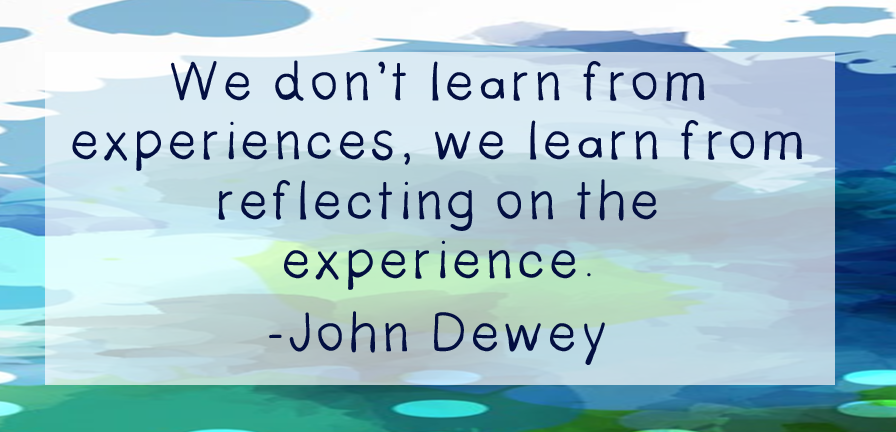
Routines For Self Reflection - THINKING PATHWAYS

By being reflective teachers, we will be able to help support the progress of our students by adapting to their needs. What we don't want to do is remain stagnant and rigid delivering the same lessons we are comfortable in delivering regardless of the impact. If we fail to reflect and adapt our teaching according to our successes and failures, then student progress will be stifled. This means that in reflective practice a degree of flexibility is essential. One of the dangers of a meticulously planned curriculum is that it can act like a straight jacket - impeding reflective adaptation. Rather a curriculum should be the handrail that guides us on a learning journey. Experienced teachers should be able to occasionally let go of the handrail and take a detour (introducing different pedagogical practices or areas of subject knowledge) before returning back to main path dependent on the needs of the students.

Ian Stonnell @DenbighCPD

Further Reading