At Denbigh there are some amazing remote learning practices; Loom videos, Mote feedback, Rubrics in assignments and more. But each of these in isolation does not guarantee that our remote learning is delivering the best results. In this blog post we will look at 6 practices that are common in some of the best remote learning at Denbigh. I am sure it will help you recognise your own good habits and also enable you to reflect on how you can further develop your practice.
1 - The quantity of learning is achievable
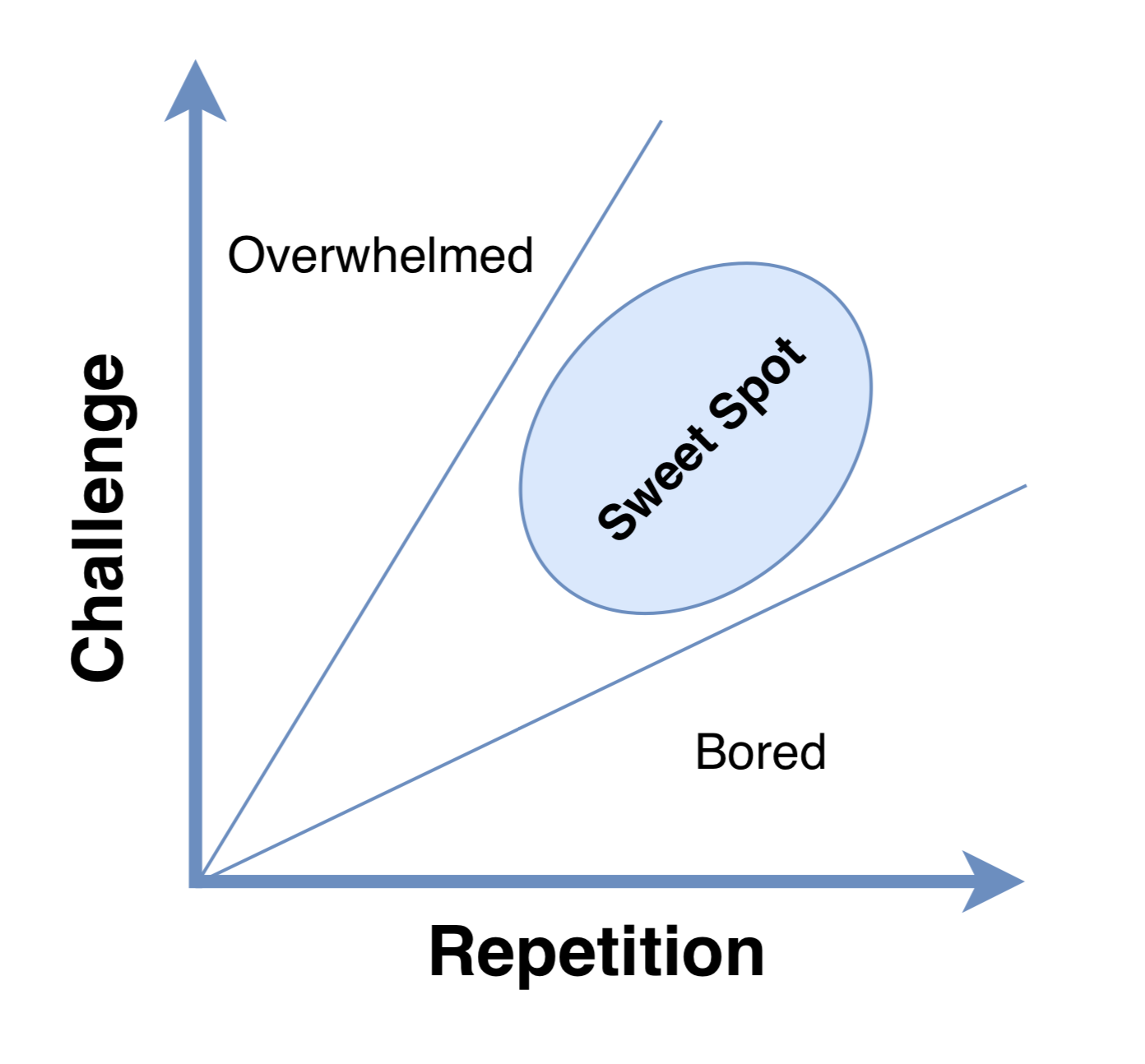
Too often one of the barriers to learning is knowledge overload. In a remote learning episode we have to be clear and specific on what we expect our students to learn by the end of it. This also has to be achievable and pose the right level of challenge. Great practice would be to include a small number of key takeaways in our pre-records and keep our videos relatively short especially if what they are learning is new. In last weeks blog the example from Tom Davies demonstrates this well.
 |
| Look! Here is a relevant visual metaphor. |
2 - The curriculum pace is kept slow
Many of us may be concerned about not covering the content in our curriculums or specifications, because of this we may feel the need to move through the curriculum as quickly as we would do when students are in the classroom. This could be a recipe for disaster. We have probably all noticed that student engagement is not at 100% and that many students are finding it more difficult to learn at home independently. As such, we need to give students more time to consolidate knowledge through regular review and rehearsal. We should build this into our remote learning curriculum. Furthermore, by slowing down the pace, students will feel less overwhelmed, feel secure in the knowledge they are acquiring and ultimately be more confident. Going slow also has the added bonus of giving students who have found it difficult to engage the chance and time to catch up.
 |
| "Slow and steady wins the race" said the tortoise to the hare. |
Obviously, slowing down the pace of a curriculum is a topic for discussion in subject areas. You could consider how year groups may need to be treated differently. For example a year 9 group starting a GCSE may benefit from going slow now, building a secure knowledge base, and then speeding up later when they come back into school. After all there is no point rushing through a curriculum now (during a lockdown) then in year 11 finding you have to teach it all again because they have forgotten it. In KS3 some subjects may even consider reducing the content in their curriculums to ensure what they do learn - they learn well.
For example Maishah Khan has reduced her Year 9 Psychology curriculum considerably to only teach one key theory this term (only four pages of the GCSE textbook). The first three weeks of term students have engaged in small chunks of new knowledge where understanding was assessed using quizzes and short questions. Then, in the upcoming three weeks students are due to consolidate this knowledge into revision resources, exam style questions and a mini-assessment that finally culminates into an evaluation of the theory.
 |
| An overview of the remote learning curriculum in Year 9 Psychology. |
3 - Only tasks that effectively support and check learning are set
Many of the tasks that we set in the classroom do not translate effectively to the remote learning digital environment. Let's consider a word search or crossword activity. In the classroom it's a reasonable little starter that can settle students and get them to retrieve some keywords with some good questioning. However, set as a remote learning task it can be a nightmare... lots of emails and comments "how do you fill in the word search? How can I highlight the words? I can't do the word search sir! Help!" All of a sudden you may have a large number of students stuck on a task that at the end of the day is pretty meaningless when it comes to assessing the learning. The task can actually become a barrier to learning.
 |
| Do this word search digitally and hand it in to me. Then tell me what you learnt. |
We cannot recreate remote lessons as a facsimile of how we delivered them in the classroom, it does not work. The best remote learning ruthlessly cuts tasks that will create barriers to student learning and only sets tasks which will support learning and enable it to be assessed efficiently.
4 - Tasks are modelled effectively
Sometimes the tasks we want students to complete are complex and necessary. If this is the case, we must model them. If a student cannot understand the process of a task, they will not engage and they will feel demotivated. How can you avoid this in a remote learning context? Model tasks to students explicitly through video tutorials - and it MUST be in videos. Students respond far better to practical demonstrations of tasks rather than written instructions (NEWSFLASH - they often don't even read them!). We know that when we are in the classroom live modelling is one of the most effective methods that a teacher employs to support students to engage in a task; we can't just replace this with written instruction and expect the same results.
In MFL the team have been superb in sharing a video for every lesson explaining how to complete tasks along with written instructions. You can also look at this example from Eric Adjei's Year 11 History where he models an essay question in his own unique style that is the only task for completion that lesson.
5 - Regular feedback is given
Doing work and getting no feedback is almost the same as doing no work at all. A lack of feedback and acknowledgement of the work completed is intrinsically de-motivating. As teachers, we need to avoid this by offering feedback as soon as we possibly can. This need not be onerous. With self-marking quizzes, rubrics and now the amazing mote, we have several time-saving ways to give feedback. The video below is an example of how you can use google forms to provide automatic feedback that has been developed in RE. You can also check this post here about the use of rubrics.
Whole class feedback is also a great time saving way to keep students motivated. Take a look at this example from Taslima Hannan in English where she gives some group feedback on a poetry task her year 8's have completed.
6 - The human touch is not lost
The saddest part of the remote learning experience is that the relationship between teacher and students can often be lost. In this lockdown the formulaic, almost robotic like routine of plan lesson, post lesson, mark work and repeat, has removed the humanity from being a teacher. The jokes, the smiles, the equally enjoyable nagging and telling offs, the motivational speeches... all the things that make teaching and learning a fulfilling human experience have disappeared!
Well there are ways to keep the human touch going. Why not send a motivational video of yourself to your classes? Do some positive name dropping and bigging up (the students that aren't mentioned might get the hint). Have a watch of my little pep talk to my year 11s this week and see what you think.
We need to remember that these are extraordinary times and that for many of us it is a difficult time too. We need to show understanding and encouragement.
...
Thanks to all the teachers who have contributed to this week's blog. There will be more examples of good practice coming next week. Leave a comment if you have found this useful or interesting - it'll make my day! 😊
Ian Stonnell @DenbighCPD