Showing posts with label CPD. Show all posts

Tuesday, 22 September 2020

Blended Learning: How to get the most out of technology for learning at Denbigh - Ian Stonnell

With the likelihood that further Covid-19 restrictions will return in the autumn and winter months the probability that we will have to resort to some form of distance learning is also high (as I write already three year groups have been sent home to isolate). As such we should be keenly aware of developing our ability to provide the best quality teaching and learning for our students through distance learning. We can start this by developing our current technology for learning practices so that, when distant learning happens we will be ready for a seamless transition. 

In this blog we will look at a few basic strategies that, if we develop and make them a part of our culture of practice in now, we can make the change to distance learning seemless for our students - it is a blended learning approach

If you wish to see these techniques demonstrated and ask further questions DEnbigh staff can sign up for the additional CPD session on Wednesday 30th September, led by myself and Emma Darcy; sign up here.

1. Using Google Classroom to share.


One of the simplest things to do with your lesson resources is to share them. Upload your lesson presentations, worksheets, video links and more just with a few clicks. By sharing resources we make sure that all students have access to them whether they are in school or out. You can also provide detailed instructions for what you want students to do with the resources when they are shared. 

2. Google Classroom to assess - Summative and Formative

Assessment is now so easy using google classroom. For formal assessments and exam questions it is possible to set assignments which students can complete in school using Chromebooks or at home. Marking these assessments is easy - you can edit students' work to add literacy suggestions automatically, you can create comment banks to give students specific feedback, and for exam questions you can even create generic rubrics that can act as assessment criteria (which you can mark along to). This is time saving and can be done at a great distance or even in the classroom for live marking. If you want to assess speaking you can also have student upload recordings of themselves that you can give feedback too.

AFL can also be built into live lessons using google forms. You can easily set a google form that can contain short, low-stakes, multiple choice knowledge questions that can be marked automatically and give you instant feedback that can be shared with the class. This can also be done remotely.

It is important to note that in both of these examples Google Classroom will automatically create a mark sheet for you that can track student progress. In the context of distance learning this is useful information that can assess how much a student is engaging with work and also how well they are doing -providing evidence for you if you need to call home for concerns or praise!

3. Using Chromebooks for literacy.

Sharing resources is easy. Why not share reading resources? In a live lesson students reading along to an extract that a teacher is reading in front of them is a powerful way to improve the vocabulary of students. Engaging in reading, with a Chromebook at their fingertips, also provides them with the means to build their understanding using online dictionaries or further signposted resources that can illustrate the concepts they are reading about. 

In distance learning scenarios you can still share reading as an activity. Then provide them with a google form quiz to assess understanding (multiple choices questions are good here) and then a longer written assignment that assesses comprehension and other desired skills.

4. Using Chromebooks to open the world.

Why not send students on an trip during distance learning? You can! Here is a 360 degree tour of the Holy Sites of Jerusalem and another visit to North Pole. Just two among hundreds available!

The internet is a gateway to the world. So long as we provide them direction, students can see the world in a way that builds their knowledge in your subject. Using resources such as Google Expeditions and Google Poly we can open the world up to our students. For the latest list of expeditions available on Google Expeditions have a look here. I need not remind you that YouTube also has a wealth of educational videos and guided tours of world sites that are also worth a search - here is a 360 degree tour of St Paul's Cathedral in London that could be used in history and RE.


5. Using Screencastify to explain and model.


Screencastify is a recording tool which is an extension added to google chrome. The free version (which we have at Denbigh) enables you to record 5 minute videos of your computer screen (such as presentation slides) with you talking over. My covid video was produced using screencastify and, after a few practice runs, I found it an easy to use. 

The impact that screencastify can have for distance learning is powerful. 

During lockdown, students reported that one of the biggest things they missed was teachers explaining concepts to them. Reading from presentations can be effective, but that guided pieces of teacher narrative can make the difference. Using screencastify we can record short and concise explanations of the more difficult concepts we deliver in our subjects. We can also model how to tackle exam questions or problems using meta-cognitive speech - a proven way to support student progress that is hard to replicate using the written word.

Ian Stonnell @DenbighCPD


Thursday, 2 April 2020

CPD in the time of Covid-19 - Subject Knowledge - Ian Stonnell

Subject knowledge has for many years been a neglected aspect of teacher development. Thinking back to when I was an NQT, the main focus of CPD was on pedagogy, classroom practice and the pastoral aspects of the job - subject knowledge sessions were sporadic and came occasionally through an external CPD course.

I suppose the logic behind this is based upon a presumption that a teacher already possesses the subject knowledge they require to teach, after all they should have a degree and a passion in that subject (why else would you want to teach it?) There is also a presumption that any gaps in teacher knowledge would be easily filled on the job. So long as we stayed a page ahead in the textbook, after a few years a teacher's knowledge would be secured.

However, this approach is increasingly up for debate. To understand the debate it is useful to understand the three types of knowledge teachers require to be effective.
  1. Subject knowledge: Knowledge of a domain. e.g. Maths or Art etc.
  2. Pedagogical knowledge: Knowledge of how to teach e.g. adaptive learning, cognitive science, metacognition, SEND, behaviour management etc.
  3. Pedagogical content knowledge: Knowledge of how to teach a given subject. e.g. how to run a tennis skills session in PE or a short skit in drama.
The best teachers are competent in all three areas. However, currently subject knowledge is neglected in our CPD models. The current trend says this needs to change.
Currently CPD in most schools does not take into account subject knowledge development.
How important is subject knowledge?
With the changes in GCSE specification to be 'knowledge rich' there has been a scramble for teachers to fill the gaps. However, although many may have complained about this upscaling in knowledge, it is important to understand why this change has happened.

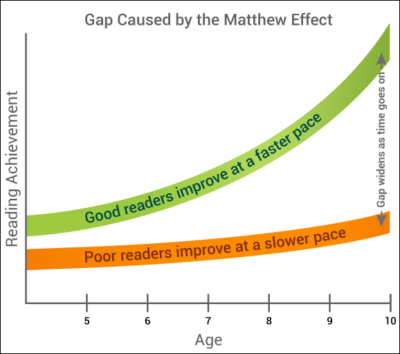
Think about money. There is a well known principle that if we start off our lives with a large amount of capital then it is easier to create more capital, regardless of how 'talented' we may be. Also if we have very little capital it is incredibly difficult to make any. Thus a gap between rich and poor develops. This is known as the Matthew effect.


Small Loan of a Million Dollars - Donald Trump CNN - YouTube
Donald Trump may not be the most talented person around but with a small starting loan of a million dollars from his Dad he managed to do okay!

The Matthew effect also applies to knowledge. The more we know about a specific area of knowledge the easier it is to acquire more knowledge in that area. For our pupils, who are novices, acquiring knowledge is crucial in enabling them to accelerate and acquire more knowledge. As such, the knowledge rich curriculum is an attempt to narrow the gap between disadvantaged students and the rest. 

Research has shown that there is 'Matthew effect' in reading which has led to a word gap between advantaged and disadvantaged students.
This means that teachers need to be secure in the subject knowledge themselves in order to be able to deliver it effectively using sound pedagogical practices. This knowledge also needs to be deep enough to engage students. This is evident in many student surveys that have taken place at Denbigh in which students rate the best teaching in line with the teachers who they perceive to have the best subject knowledge. Furthermore, the students who won scholarships to Berkhamsted Sixth Form College reported that one of the major differences they noted was the subject expertise that their teachers possessed (this could be accounted for due to the transition to sixth form). 


It is evident that some of the most appreciated teachers are the ones who have deep subject knowledge. 


As an RE teacher, I can confess that my ability as a teacher only improved with the development of my own subject knowledge. Take for example my own knowledge of Islam. In my NQT year, a decade ago, my knowledge was no deeper than the five pillars. I could make a fun lesson or two and design lots of activities around them but the deeper knowledge behind those five pillars, the links to Islamic beliefs, history and culture and how they relate to personal and spiritual development did not exist. 

The best piece of CPD I did was to develop my knowledge of Islam. I sought out books on Islamic history and the Sunni/Shiah split, biographies of the Prophet (pbuh), as well as watching every documentary I could find. It took many years and is still ongoing.

Two of the books that helped me to become a better teacher of Islam.
Now, I would not claim to be anywhere near an expert (as the more we know, the more we realise we don't know) but I can be confident in answering further questions and contextualising beliefs and practices with a few more interesting anecdotes that promote engagement. That makes me a better teacher of RE regardless of what students I teach. 


How do we develop subject knowledge? 

Pedagogy matters - CPD in schools aims to help develop it and it should continue to do so. However subject knowledge needs more time. As a CPD lead at Denbigh we are planning to give more time to departments to help develop it in the upcoming 2021-22 academic year. Nevertheless, the best way to do it is to be passionate about our own subjects and seek out books, websites, subject associations and documentaries to develop our knowledge of our subjects (whether it be knowledge of the content we teach, or wider knowledge of that subject). 

28% of Americans Have Not Read a Book in the Past Year | Time
"The more that you read, the more things you will know. The more that you learn, the more places you'll go" Dr Seuss. You can also add to the end of this quote - "and the more you can teach".
Enjoy your reading!


Further Reading

Monday, 27 January 2020

How to engage with the education debate - Ian Stonnell

The world of online education research and debate is a daunting one to any teacher looking to start getting involved. There are thousands of tweeters, hundreds of education blogs and numerous education sites all of which can enlighten but also confuse. It is hard to know where to begin and where to find the quality. So, as a teacher looking to get involved and learn something new what do you do? Here is a short guide to get started.

Related image

Get on Twitter
Get on Twitter and start to follow some of the main teaching blogs and education thinkers. You can start by following @DenbighCPD and have a look at who I am following. I would highly recommend Tom Sherrington and David Didau as people to follow. However it is probably best to start your own search. There is a great list of leading tweeters here that you can begin following today.

Clcik on the picture to see a larger version of this list.


Hashtags are also a powertful twitter tool. By searching a hashtag you can access lots of educational content without having to follow anyone. You can also ask questions through tweets and add a hashtag which will give it a good chance of getting a response. Click here for a list of the most popular education hashtags (including subject specific ones).

(NB: If you want to see some of this is practice come to the additional CPD in the conference room on Wednesday 12th February).

Online teaching blogs
Start looking at some of the best teaching and learning blogs. I have provided a list of links to many of these blogs on this site (look to the right if you are on the desktop site). These blogs routinely use academic evidence to support their strategies and can also be followed on twitter. Bear in mind that there are many subject specific blogs and sites that I have not included in this list. You can follow most of these blogs on twitter too.

Image result for learning spy

Teaching asociations
Consider joining or following on twitter some of the larger organisations that provide general research informed strategies such as the Chartered College of Teaching and ResearchED. These organisations are leading the way in evidence informed practice. ResearchED also host several events across the country through the year that are well worth a visit. Denbigh will be running another trip for teachers this year. There are also a host of subject associations that are worth following.
Image result for researched

Podcasts
Fancy a listen rather than a read? There are several podcasts that can replace bedtime reading, or listening to the news on the way to work. The learning Scientist podcast is a great start and here you can find a good list of some other education podcasts that may tickle your fancy. 

Image result for podcast


Give new things a go
Experiment with what you learn. Perhaps pick up one strategy and idea and give it a go - see if it works and if it does keep on using it and why not share!?

I am sure that once you start getting involved you will find lots of things that will inspire you - I haven't met many teachers who haven't found it beneficial - perhaps just avoid getting into any protracted and unnecessary twitter debates unless you like that kind of thing!

Good Luck!

Further Reading and instructional videos